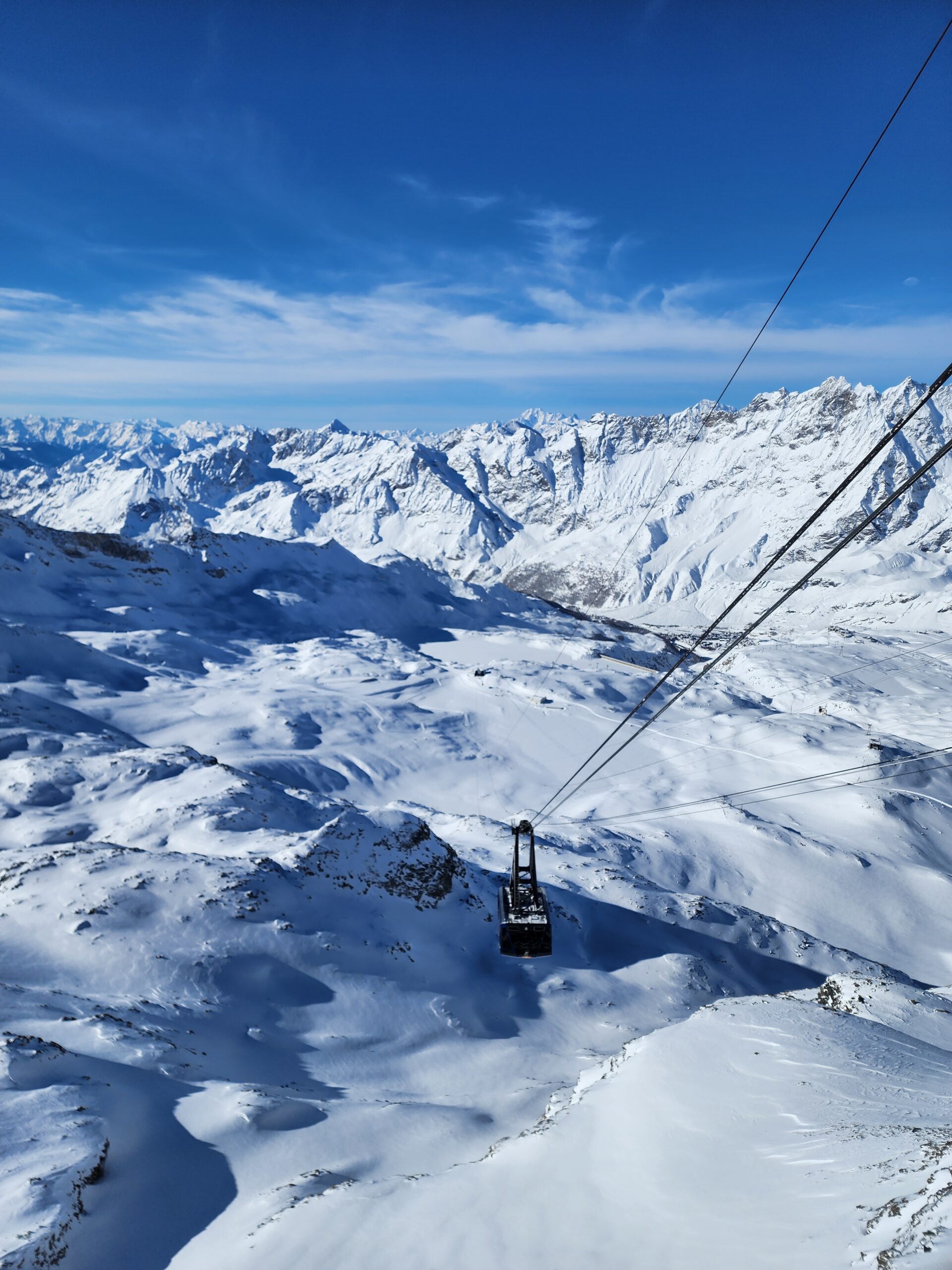
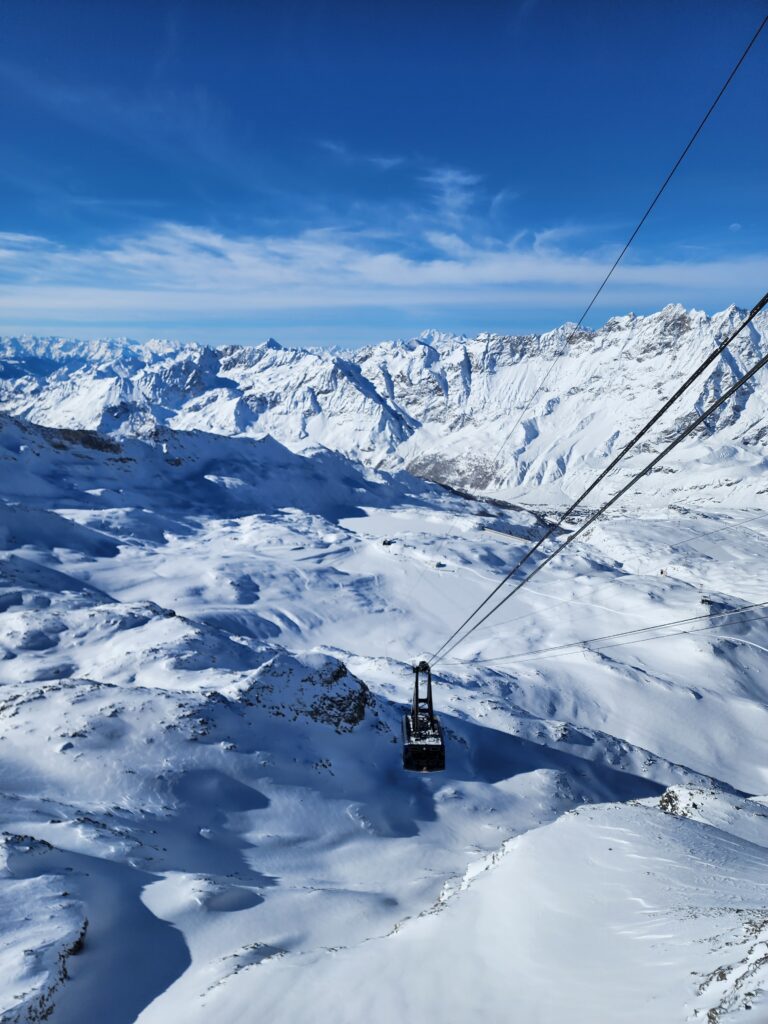
The ski lift groans to life at 7am and you’re already 2,050 metres above sea level — yet the summit is still a world away, piercing the clouds like a crooked tooth. That’s the Matterhorn. And if you’re lucky enough to be strapped into a snowboard on the slopes of Cervinia, you’ll spend most of the day riding under its shadow, wondering how a mountain this absurdly dramatic got to be your Tuesday backdrop.
Cervinia — officially Breuil-Cervinia — is not a secret. But among Italy’s ski resorts, it punches differently. Where Cortina d’Ampezzo has its fashion crowd and Courmayeur its après-ski scene, Cervinia has one thing the others can’t touch: altitude. At 3,480 metres at the top station, it’s one of the highest ski areas in Europe, which means powder when other resorts have slush, and runs that go on long enough to make your thighs genuinely angry at you.
Getting There (and Why It’s Worth the Faff)
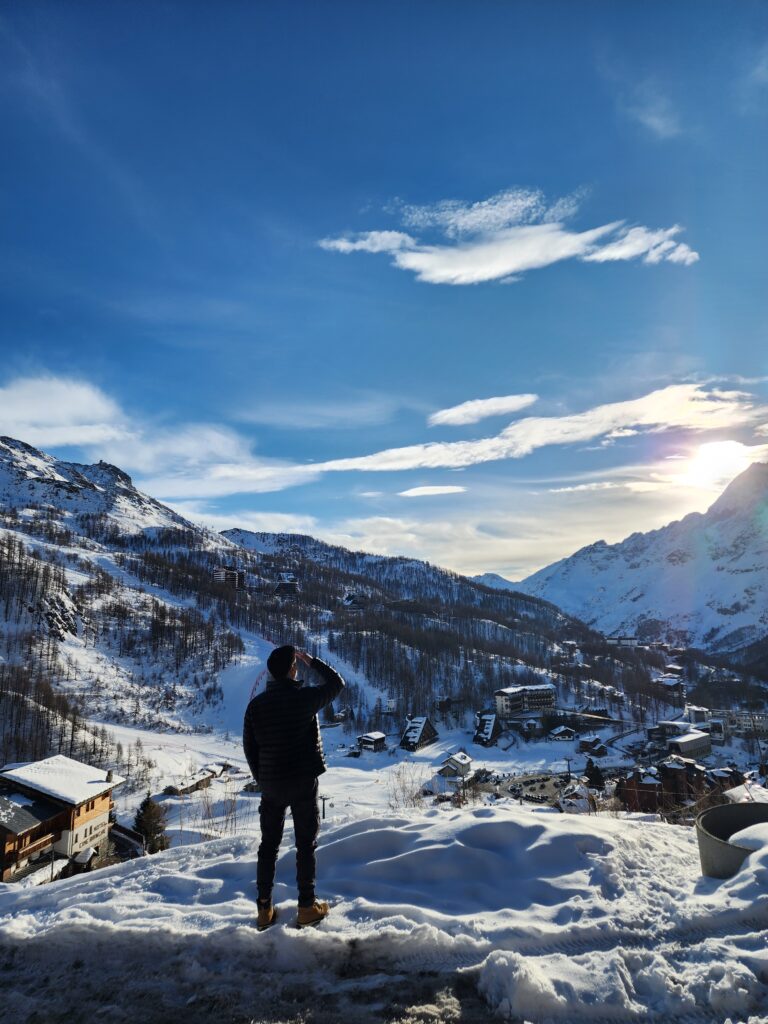
The closest airport is Turin (roughly 1.5 hours by car), though Milan Malpensa works too at around 2 hours. From either, you drive up the Aosta Valley — one of those alpine approaches that makes you feel like you’re entering a different country entirely, all stone villages and vertiginous switchbacks.
The village of Cervinia sits at 2,006m, which means even the car park has altitude. Arriving in the evening, the air has that high-mountain sharpness that hits the back of your throat like cold water. It’s a good sign. It means the snow is dry.
The resort town itself is functional more than charming — a cluster of hotels, fondue restaurants, and ski rental shops that feel purpose-built for one thing. That’s fine. You’re not here for the architecture.
The Riding: What Makes Cervinia Special
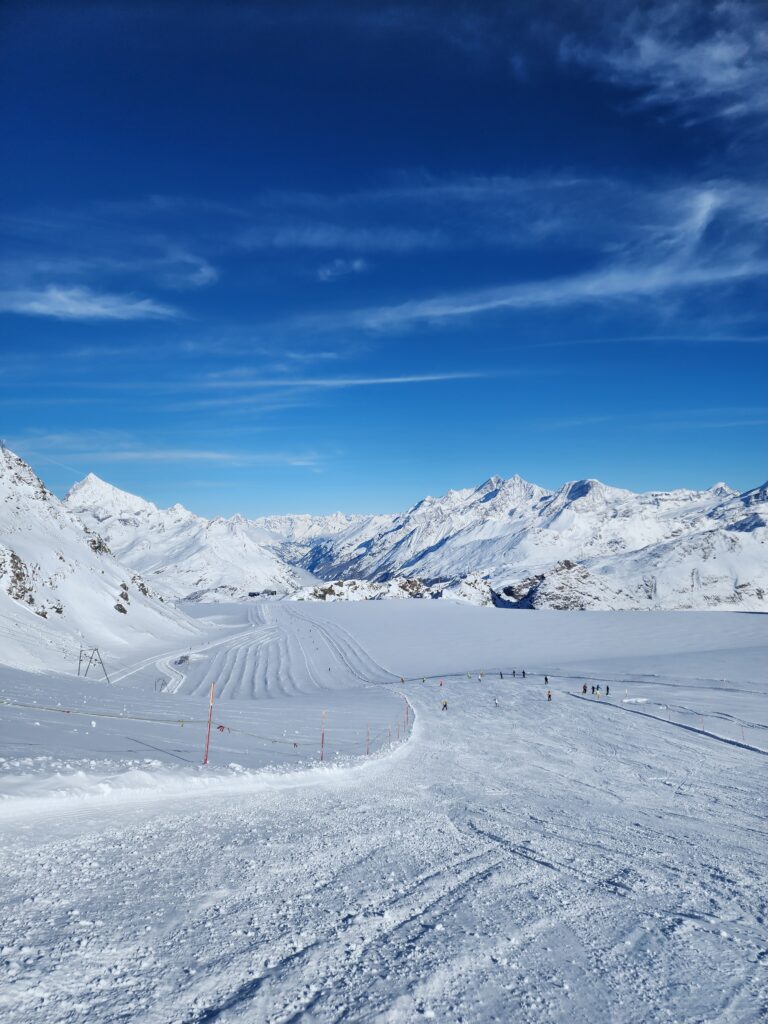
Cervinia is linked with Zermatt across the Swiss border, making the combined ski area enormous — over 360km of marked runs. For snowboarders, this opens up something genuinely thrilling: a cross-border day trip on snow.
The runs are long. Uncommonly, almost rudely long. The main descent from Plateau Rosa (3,480m) back to the village drops nearly 1,500 metres of vertical over several kilometres. On a clear day — and Cervinia gets a disproportionate number of clear days thanks to its position in the Aosta Valley’s rain shadow — you can link turns for 20 minutes straight without hitting a lift queue or a flat section. This is the run snowboarders dream about and rarely find.
The terrain tilts toward intermediate riders, which isn’t a criticism. Long, wide blues and reds that invite you to lay down proper carves rather than fight for space. More advanced riders will find their lines on the higher glacier terrain and off-piste stashes around Plateau Rosa and Testa Grigia. Nothing extreme, but enough to keep things interesting.
Watch out for the flats. Cervinia’s interconnecting routes have a few genuinely flat sections that will stall a snowboard and send you skating awkwardly while skiers glide past looking smug. Scout the trail map before committing to traverses. The main valley run is the worst offender — fine on a ski, mildly irritating on a board.
Crossing Into Zermatt
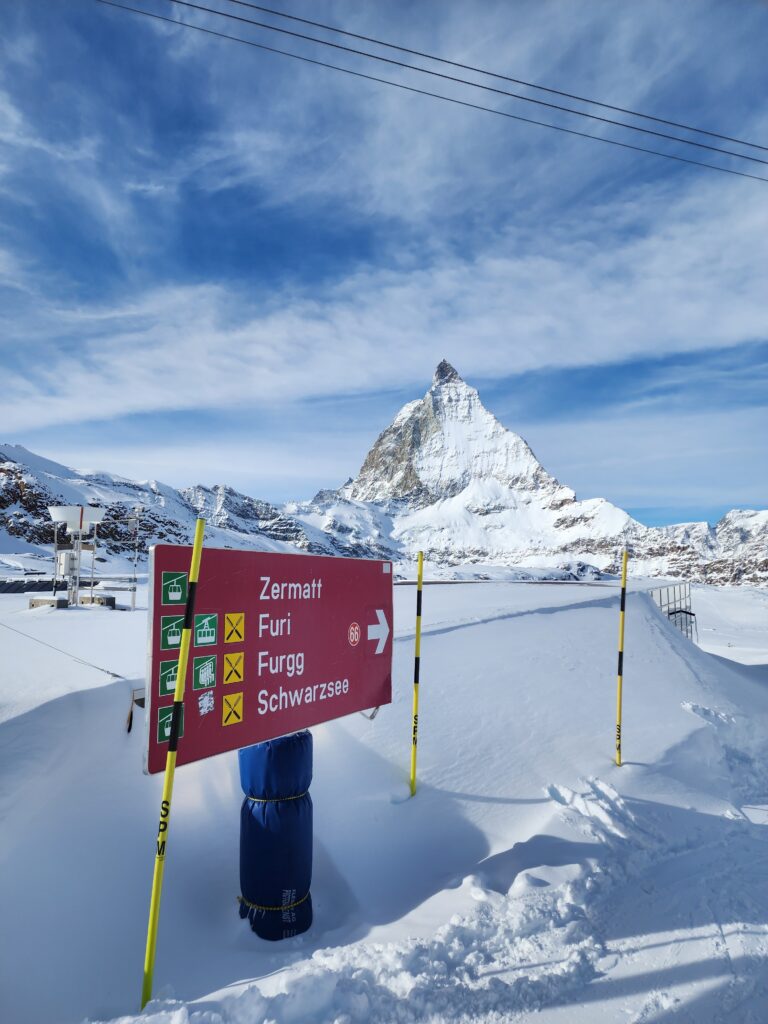
On a bluebird day, point yourself toward the Swiss border. You’ll ride up to Plateau Rosa and cross into Zermatt territory without so much as showing a passport — just a ski pass that covers both sides (buy the Zermatt-Cervinia joint pass; it’s worth it).
Zermatt’s terrain is wilder and more varied — steeper pitches, more off-piste, better tree runs — but you’re coming from Italy, which means you need to get back before the last lift. Build in a buffer. Missing the final crossing means a train and taxi situation that no one wants to negotiate in ski boots.
The Matterhorn, seen from the Swiss side, looks entirely different. Less vertical, more hulking. The Italians got the better view.
Off the Mountain: Eating and Drinking in Cervinia
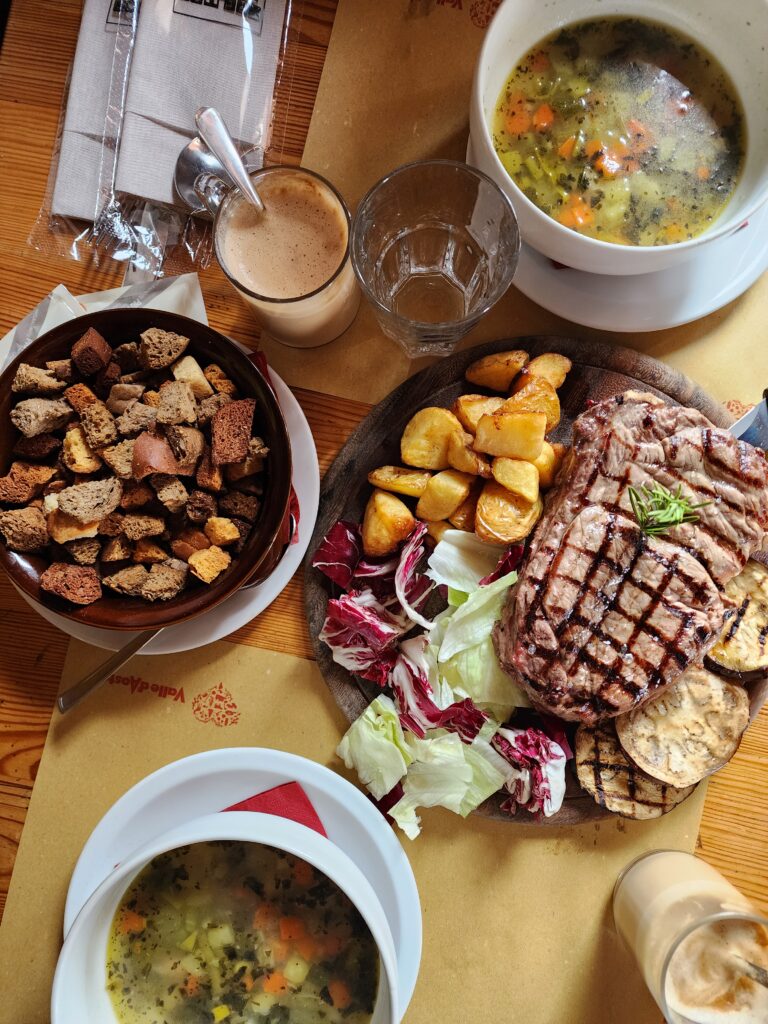
This is Italy, which means the food is better than it has any right to be at 2,000m.
Lunch on the mountain: Head to one of the rifugi dotted across the slopes. Sun-warmed terraces, plates of pasta, small glasses of wine that feel absolutely justified at noon given the morning’s exertion. La Bricole and Lou Ressignon are both reliable. Order the polenta. Order whatever the pasta of the day is. Eat it in your ski jacket with your boots still on.
Dinner in the village: Fondue and raclette feature heavily, given Cervinia’s position at the intersection of Italian and Swiss alpine culture. The fondue at Al Solito Posto is worth seeking out. For something more Italian, most restaurants run a solid aperitivo from 5–7pm — a tradition that deserves to be more universally adopted.
The après situation: Quieter than you might expect. Cervinia skews toward families and couples rather than party groups, which makes for a more civilised end to the day. Bar supporters will find what they need; those hoping for a full Verbier-style rave will be disappointed.
Practical Notes for Ski and Snowboarders
- Rent or buy a lift pass with the Zermatt link — doing both sides is the whole point.
- Go in March or April if you can. The altitude keeps snow quality high long after lower resorts are turning to mush, and the longer daylight hours mean more runs.
- Accommodation: Stay in the village itself rather than driving up each day. The altitude means an extra hour of acclimatisation sleep the first night, and you want to be walking distance from the gondola.
- Bring layers you can strip. Morning shadows make the upper glacier runs genuinely cold (−10°C or below). By early afternoon on a sunny day, you’ll be riding in a base layer.
The Thing About A Cervinia Ski Trip
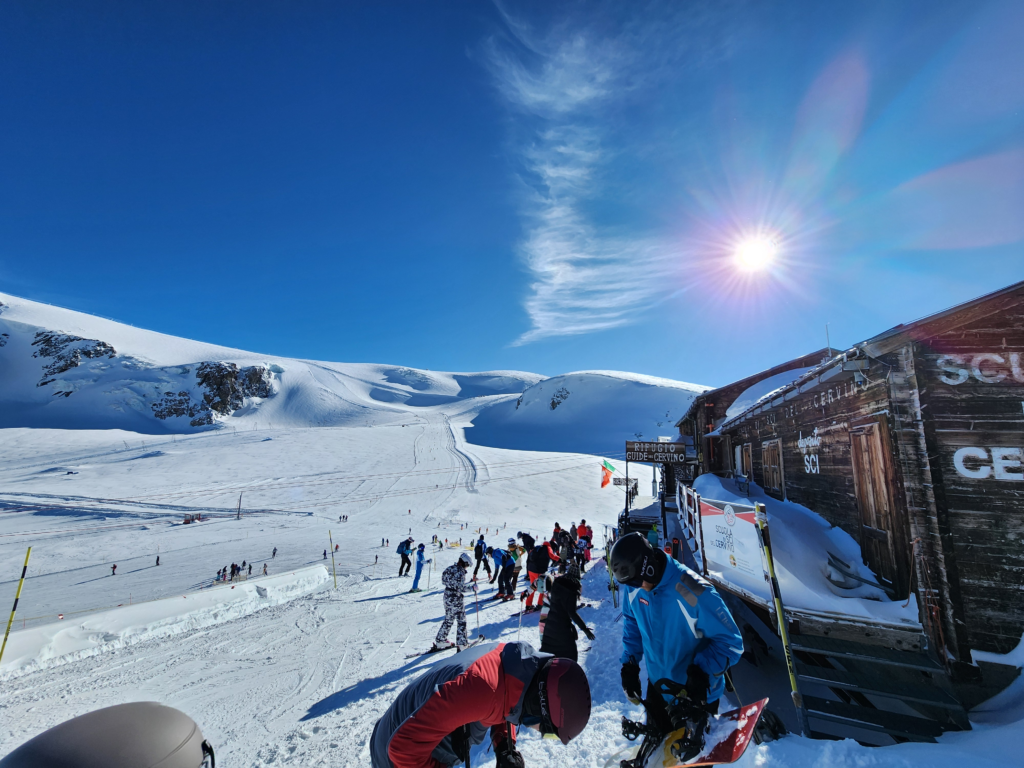
There are flashier resorts. There are resorts with better parks, gnarlier terrain, livelier villages. But Cervinia has that run — the one from Plateau Rosa all the way down, the Matterhorn off your left shoulder, 1,500 vertical metres of grippy snow stretching out ahead of you, and nothing to do but ride.
Some days, that’s exactly enough.
Read my last article here: Lisbon & Porto: Two Cities, One Irresistible Country.